How Does an AC work?- Basics

Tom Markley • June 30, 2021

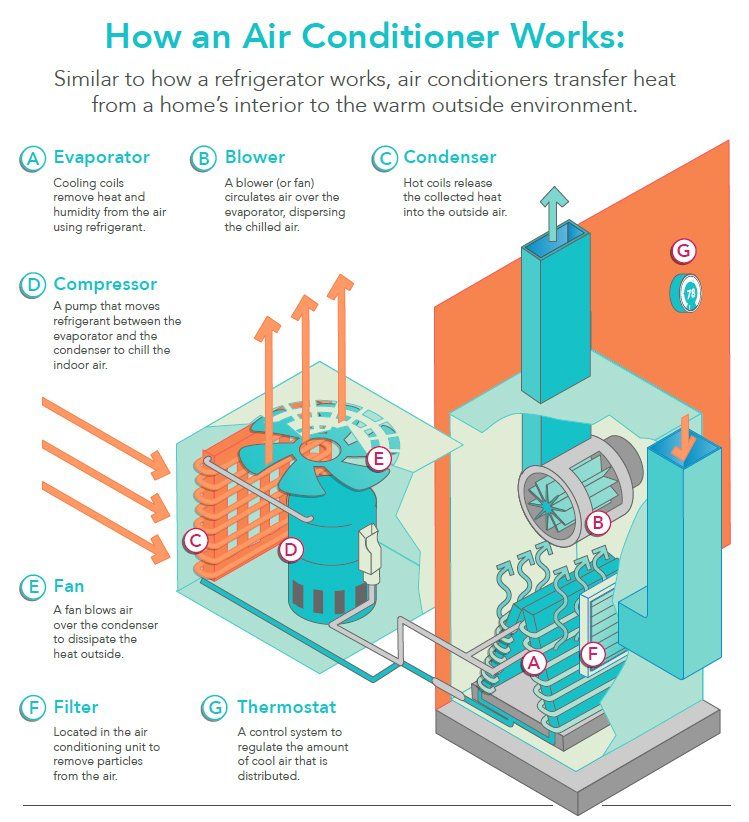
An air conditioner can change the temperature, humidity or general quality of the air. More specifically, an air conditioner makes your home cooler, by drawing heat energy out of the house and transferring that heat to the outdoors, then replacing the air inside your home with cooler air.


The air conditioner in a central heating and cooling system provides cool air through ductwork inside your home, by providing a process that draws out the warm air inside, removing its heat.


In a split system, the compressor condenses and circulates the refrigerant through the outdoor unit, changing it from a gas to a liquid. The liquid is then forced through the indoor evaporator coil or cooling compartment. The indoor unit’s fan circulates the inside air to pass across the evaporator fins. The evaporator’s metal fins exchange the thermal energy with the air around it. There, the refrigerant turns from liquid into vapor, removing any heat from the surrounding air. As the heat is removed from the air, the air is cooled and blown back into the house.


From that point, the condenser or outdoor unit then turns the refrigerant vapor back into a liquid, removing any heat. By the time the fluid leaves the evaporator again, it is a cool, low-pressure gas, eventually returning to the condenser to begin its trip all over again. This process continues again and again until your home reaches the cooling temperature you want, as programmed and sensed by your thermostat setting.


If you are in need of service to your AC Unit or would like to get a quote on a new system, please contact us at Alpine Heating & Cooling at one of the below methods.


P: (330) 359.7114 or (330) 263.0013


E: sales@alpinehcservices.com

Service Tech Jeremy Kaufman
February 3, 2026
Service Tech Jeremy Kaufman
By Tom Markley January 27, 2026
TUESDAYS WITH THE TECH This week we continue learning more about the Service Techs of Alpine and the Industry as a whole. This week is Ashland Native Trey Bright. 1. What’s one thing homeowners might not realize about heating & cooling? A: Systems are more complex than they may realize 2. Favorite State you’ve visited other than Ohio?. A: Tennessee 3. Would you rather be chased by one angry goose or ten aggressive squirrels? A: 1 angry goose! Bigger target to kick! 4. What’s one piece of advice you’d give a homeowner to avoid breakdowns? A: Maintaining there units is key to keeping them running longer  5. Remove One for the rest of your life… 1. Pizza 2. Cheeseburgers 3. Pasta A: Pasta . . . #tuesdayswiththetech #alpine #heating #winter
HVAC SERVICE TECHNICIAN
January 21, 2026
HVAC SERVICE TECHNICIAN
January 14, 2026
Navigate the challenges of DIY HVAC repair with humor and insights from Alpine Heating & Cooling, and learn when to call in the experts.
A cozy A-frame cabin surrounded by snow-covered trees at dusk, warmly lit with string lights,
By Tom Markley January 7, 2026
Start the new year with a high-efficiency heating system that delivers better comfort, lower energy bills, and reliable warmth all winter long.
December 19, 2025
Most HVAC problems don’t start with a breakdown. They start quietly—months or even years earlier—because of one simple habit almost every homeowner has. They wait until something stops working to think about their HVAC system.  HVAC Systems Don’t Fail Suddenly—They Wear Out Your furnace or air conditioner doesn’t usually “just die.” It wears down gradually through: Longer run times Higher electrical draw Rising internal temperatures Increased vibration and stress By the time a system shuts off or trips a safety, the damage has often been happening for a long time. That’s why emergency breakdowns almost always come with higher repair costs. What Actually Causes Premature HVAC Failure Contrary to popular belief, age alone isn’t the biggest killer of HVAC equipment. The most common causes are: 1. Small Issues Left Unchecked A weak capacitor, dirty flame sensor, or failing blower motor doesn’t always stop the system—but it forces other components to work harder. That added strain shortens the life of the entire system. 2. “It’s Still Working” Syndrome Homeowners often delay service because: The house still heats or cools The system hasn’t locked out There’s no obvious warning light Unfortunately, HVAC systems can operate while slowly damaging themselves. 3. Deferred Maintenance Costs More Than Repairs Skipping routine service doesn’t save money—it shifts the cost to: Larger repair bills Emergency service calls Shortened system lifespan A simple maintenance visit can prevent a $1,500 breakdown. Why Breakdowns Always Happen at the Worst Time There’s a reason furnaces fail during cold snaps and ACs quit during heat waves. Extreme weather forces systems to: Run longer Start more frequently Operate at peak capacity If a component is already weakened, that’s when it finally gives up. What “Normal Operation” Should Actually Look Like A healthy HVAC system should: Start smoothly Run consistently (not constantly) Shut off cleanly Maintain temperature without drastic swings Sound the same month to month Changes in sound, runtime, or performance are early warning signs—not inconveniences. The Smarter Way to Think About HVAC Ownership Instead of asking: “Is it broken?” A better question is: “Is it operating the way it should?” That mindset shift alone prevents many major HVAC failures. Final Thought Your HVAC system is one of the most expensive mechanical systems in your home. Treating it as something to react to—rather than maintain—almost guarantees higher costs and shorter lifespan. The homeowners who get the longest life and lowest total cost aren’t lucky. They’re proactive. Serving Wooster, OH, and surrounding communities since 1993, we are a locally owned and operated HVAC contractor working with a variety of heating and cooling systems. Call (330) 263-0013 to schedule an furnace repair or inspection and visit our website to learn more about our qualifications. Connect on Social Media for more tips and insights.
People walking in winter snow storm
By Tom Markley December 10, 2025
Don’t panic—get warm fast! Follow these expert steps to troubleshoot your heater and stay safe when the heat goes out in the middle of winter.
By Tom Markley November 26, 2025
Cold Hands in Sweater
November 19, 2025
Northeast Ohio homes often feel cold even at 72°. Learn why comfort drops despite a warm thermostat and how Alpine Heating & Cooling can fix the real causes fast.
Pipe bursting from cold temperature
November 12, 2025
Protect your home from frozen pipes! Follow these 5 quick tips to prevent costly pipe bursts and keep your plumbing safe during winter.
More Posts